Vice President Sara’s latest response: I will be killed; I do not trust the courts or the police.
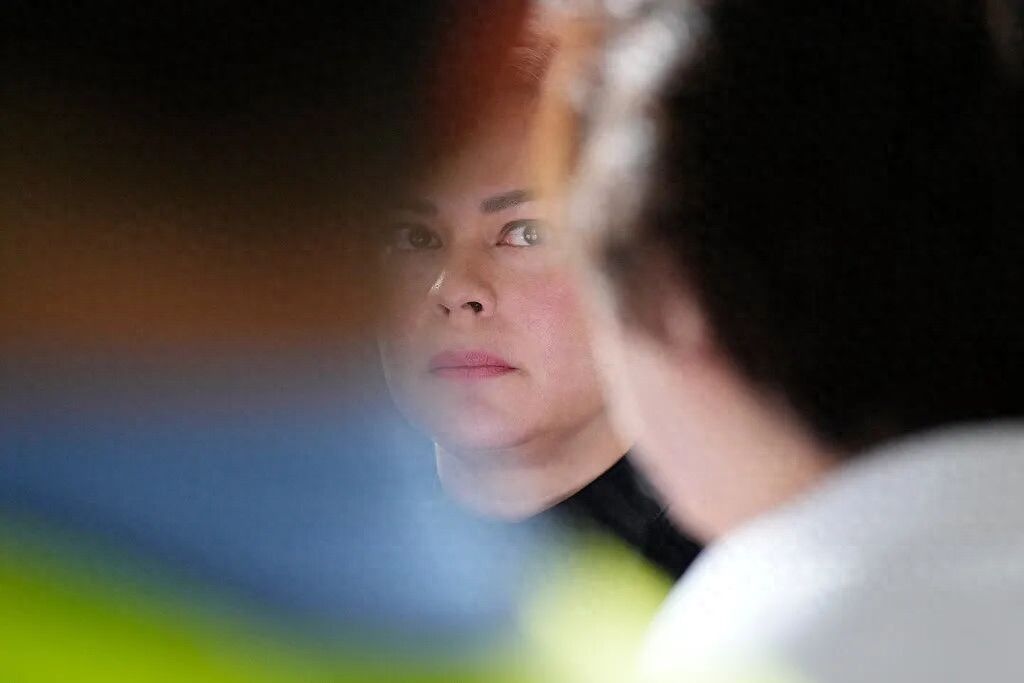
On September 5, 2026, local time, Philippine Vice President Sara Duterte, accompanied by her lawyers, arrived at the Quezon City Regional Trial Court Branch 98 to process her bail. After completing the relevant bail procedures, the court lifted the arrest warrant issued previously.
One day earlier, the Quezon City Regional Trial Court Branch 98 issued an arrest warrant for Sara. The court found “probable cause” for three counts of “grave threats,” officially moving the case into the trial preparation stage.
The arrest warrant was issued by Judge Maria Angelica de Ramos, with total bail set at 360,000 pesos (approximately RMB 38,500). Under Philippine law, the base penalty for the crime of “grave threats” ranges from one to six months of imprisonment. Analysts believe that this case could further escalate political tensions in the country during the critical period leading up to the 2028 presidential election.
Here is the English translation of the news text:
Midnight Livestream
The origins of this judicial storm trace back to Vice President Sara Duterte’s midnight livestream on November 23, 2024.
That night, Sara held an online press conference at the Office of the Vice President. She stated that if anything were to happen to her, she had contacted an “assassin” and ordered them to kill President Ferdinand Marcos Jr., First Lady Louise Araneta-Marcos, and then-House Speaker Martin Romualdez. She emphasized that this was not a joke and stated that she had issued the instructions accordingly.
These remarks immediately triggered a reaction from government security departments. Malacañang Palace characterized the statements as an “active threat,” and presidential security was subsequently upgraded. Sara later stated that her remarks had been “maliciously taken out of context.”
Two days later, the Philippine Department of Justice (DOJ) and the National Bureau of Investigation (NBI) announced an investigation into the matter. The probe underwent a lengthy process of evidence gathering and prosecutorial procedures. In February 2025, the NBI submitted its findings to the DOJ. Reports indicated that Sara had made similar remarks during online press conferences in October and December 2024. During this period, the NBI had also proposed “inciting to sedition” charges, but this allegation was subsequently dismissed.
On August 11, 2026, the DOJ confirmed that the case had been formally filed. The indictment documents were divided into three counts of “grave threats,” corresponding respectively to President Marcos, the First Lady, and Romualdez.
Sara’s lawyers subsequently filed a motion requesting the dismissal of the charges and the suspension of the arrest warrant pending the resolution of the jurisdiction issue. Her defense team argued that as the vice president, she is an impeachable official under the constitution and should not be subjected to criminal prosecution during her term for acts related to impeachment proceedings.
On August 25, the Quezon City court held oral arguments regarding the motion. On September 4, the court dismissed the motion, ruled that “probable cause” existed, and formally issued an arrest warrant.
The warrant was issued by Branch 98 Judge Maria Angelica de Ramos. Sara herself confirmed that her office received the warrant that day, stating that “lawyers Paul Lim and Clifford Chai will handle this matter immediately.”
On the day the arrest warrant was issued, the Quezon City Police District deployed about 50 additional police officers near the Hall of Justice.
Police later clarified that the deployment was a routine security task carried out at the request of the building’s security department, rather than a special operation to arrest Sara, and the officers subsequently withdrew from the scene. Quezon City Police District Director Brigadier General Christoper Olazo stated, “At present, we are not here to arrest anyone; we are here to ensure the security of the court.”
Trial Nearing
House impeachment prosecutor Terry Ridon emphasized on September 4 that an arrest warrant does not equal a determination of guilt. “The issuance of the arrest warrant does not mean the court has concluded that Sara carried out an assassination plot; rather, it means the prosecution’s materials are sufficient to support moving the case to trial. Sara can still present her defense in the criminal court.”
Meanwhile, the charges are bailable. The court set bail at 120,000 pesos for each of the three charges, totaling 360,000 pesos. Secretary of the Interior and Local Government Jonvic Remulla stated that day that Sara’s lawyers had received the arrest warrant and were preparing to process the bail “as soon as possible.”
Sara’s lawyer, Paul Lawrence Lim, stated that afternoon that his client “has no intention of evading the law and will continue to pursue all available legal remedies.”
On September 5, prior to heading to the court, Sara released a statement through the Office of the Vice President noting: “Since 2023, I have been subjected to threats and harassment, which have been documented. I fear for my children. I feel that if I am with them, they are not safe.” She also stated, “I have left the place where my children are to go to court, but the police still went there. I feel unsafe. I feel like they are going to kill me.”
Upon arriving at the Quezon City Hall of Justice, Sara told the media: “I really feel unsafe. I don’t trust the court, I don’t trust the police.”
University of the Philippines College of Law Vice Dean Tamase noted in an interview that after Sara’s lawyers file for bail with the regional trial court, she may not be required to appear in person.
Article 282 of the Revised Penal Code of the Philippines defines “grave threats” as threatening to inflict upon a person or their family a wrong amounting to a crime against chastity, person, honor, or property. The Supreme Court has previously pointed out in relevant jurisprudence that whether a threat instills fear in the recipient is not the sole criterion; the key is whether the perpetrator intended for the threat to be taken seriously and to intimidate the target. According to Article 282, Paragraph 2 of the Revised Penal Code, unconditional “grave threats” carry a penalty of imprisonment ranging from one month and one day to six months, plus a fine not exceeding 100,000 pesos.
However, the special circumstance of this case is that Sara’s remarks were made publicly during an online press conference. The prosecution filed charges under the “grave threats” provision of the Revised Penal Code while simultaneously invoking Section 6 of the Cybercrime Prevention Act of 2012, which stipulates that crimes committed through information and communications technology carry a penalty one degree higher than that specified in the original penal code.
The “Second Front”
When the arrest warrant emerged, Sara was not only a defendant in a criminal case; she was also a vice president currently undergoing an impeachment trial in the Philippine Senate—marking the first time in the country’s history that a sitting vice president has faced an impeachment trial.
Sara and Marcos were running mates in the 2022 general election, together winning the presidency and vice presidency. However, by 2024, relations between the two powerful families rapidly deteriorated. In June, Sara resigned from her cabinet posts, including as Secretary of Education, which was viewed by the media as a critical tipping point in the rupture of their alliance. In September, she publicly stated that she and Marcos were “not friends.” The “assassin” remarks in November pushed the conflict to new heights. Thereafter, impeachment and criminal investigations were launched successively.
The impeachment case Sara currently faces is not a simple continuation of previous proceedings. On February 5, 2025, the House of Representatives voted 215 in favor of impeachment and transmitted the case to the Senate, but that round of impeachment proceedings was subsequently terminated by the Philippine Supreme Court on procedural unconstitutionality grounds, failing to reach a substantive trial in the Senate.
On May 11, 2026, the House of Representatives passed a new impeachment complaint with 257 votes in favor, 25 against, and 9 abstentions. The new complaint involves four charges: misuse of confidential funds, unexplained wealth, bribery, and threatening remarks. On May 13, the Senate received the articles of impeachment, and constituted itself as an impeachment court on May 18.
On July 6, the trial officially commenced. Under the constitution, a conviction requires a two-thirds majority of the 24 senators (i.e., 16 votes). Presiding Judge Francis Escudero reaffirmed this rule on the first day of the trial. Senate Majority Leader Migz Zubiri revealed that some senators were discussing adjusting the vote threshold due to the absence of four colleagues. Meanwhile, House prosecutors were considering dropping the bribery charge from the impeachment complaint to accelerate the trial process.
House impeachment prosecutor Terry Ridon emphasized that the September 4 arrest warrant did not supersede the impeachment proceedings, as the two processes operate independently. “Criminal cases and impeachment are two different accountability mechanisms; the criminal court handles criminal cases, while the Senate impeachment court is responsible for constitutional-level political accountability.”
Some analysts believe this case further exposes the intensifying political confrontation between the Marcos and Duterte families. While the impeachment case remains fraught with uncertainties, the criminal case has opened up a “second front.” If Sara’s criminal charges are upheld and the final verdict takes effect, while it would not directly remove her from the vice presidency, it would constitute a disqualification barrier for running for public office and directly impact the 2028 presidential election.